
Inclusive Practices
Rethinking the Call-On-Come-Back Practice
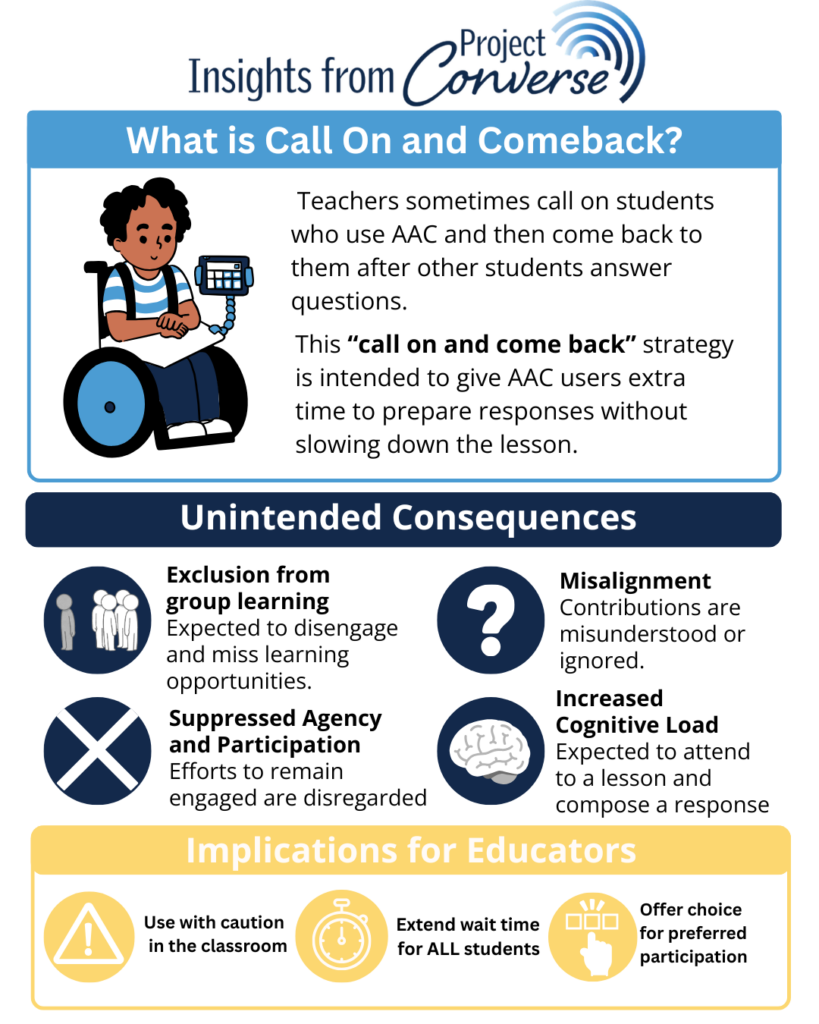
Jared sat with his speech‑generating device as the teacher led a lively group vocabulary lesson. She asked him to write a sentence using the words block and drive, giving him thirty seconds to think and thirty seconds to write. She then turned back to the rest of the class and moved on to new words for everybody else.
Jared remained still. A paraprofessional nudged his device toward him, encouraging him to type, but he kept his attention on the whole‑group discussion. When the teacher later asked everyone, “I never remember what?” Jared immediately composed a relevant response, saying “to check your phone.” He enthusiastically repeated it twice more without acknowledgement.
Holding the Floor: The Impact of Wait Time for AAC Communicators
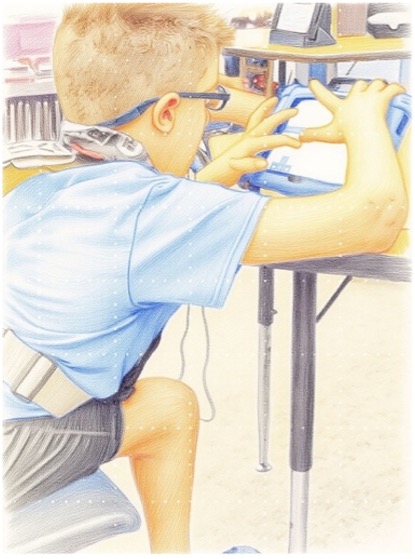
Mei sat at her table with her speech-generating device angled toward her, listening as the teacher asked, “What’s another word for steer?” She immediately shifted her body toward the device, her stylus hovering above the keyboard. Her teacher could see she had started composing a response.

A few seconds passed, the classroom buzzed with low-level noise, but Mei stayed focused, eyes fixed on her SGD screen. Instead of filling the silence with another question or prompting her to answer, the teacher simply paused and waited. Her quiet stillness signaled that Mei’s turn was still active, that her voice, no matter how long it took, was valued. The floor was hers; the class would wait.
Two… three… four seconds later, Mei tapped the keys and her device spoke, “turn it.” A grin spread across her face. The teacher echoed back, “Yes, turn it! That makes perfect sense.” By waiting, the teacher protected Mei’s opportunity to contribute, honored the time needed for AAC composition, and ensured that Mei’s response shaped the direction of class discourse.
Download to Read More in Word or PDF
Designing Literacy Instruction that Honors All Communication Modes
Lucía sat at a small group table with her AAC device resting in front of her. Her eyes were fixed on the teacher at the front of the room. The class was discussing the word remember, and the teacher had just asked students to think about which vocabulary word matched the sentence, “I know his name.” Lucía lifted her elbow and raised her hand, an unmistakable signal that she had an idea to share. Her gaze stayed forward, fixed on the projected vocabulary words.
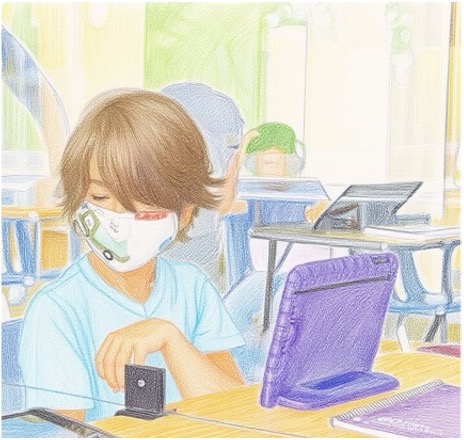
When the teacher repeated the question, Lucía responded immediately with a quiet but confident verbal approximation, “wamamba,” while pointing directly toward the word remember on the whiteboard. Although the spoken word wasn’t fully intelligible, her gesture, gaze, and timing together made her meaning unmistakable. The teacher lit up, accepting her multimodal response without redirecting her to use her aided AAC device. “Yes! Remember! I love how you said that” she told her, validating not just the accuracy of her answer, but the legitimacy of the way she communicated it. Lucía lifted her elbow again, signaling that she was eager to keep participating.
Download to Read More in Word or PDF
Balancing Form and Meaning Expectations
Ivan, a young student who uses a speech generating device (SGD) some of the time, is participating in a one‑on‑one literacy lesson with his teacher. They’ve just finished a picture walk of the book they will read next. As the teacher prepares to begin reading, she looks at Ivan with an encouraging smile and asks,

“Would you like to read the book, or would you like me to read it?” She supports her question with hand gestures—first toward him, then toward herself—offering a clear choice. Ivan quickly and efficiently reaches his arm toward the teacher, mirroring her gesture. His communication leaves little ambiguity: he wants her to read.
But instead of accepting his response, the teacher pauses, points to his device, and says gently, “Use your words to tell me, please.” Ivan shifts his body toward the SGD, lifts his hand, and begins composing. Four long seconds pass as he navigates to the single word he needs. Finally, his device announces: “You.”
The teacher nods and says, “You want me to read? All right.” The book reading begins, about six seconds later than it would have if Ivan’s embodied form of communication had been accepted. In that moment, Ivan’s efficient communicative gesture became a “trouble source,” not because the meaning was unclear but because it didn’t match the teacher’s expectation for a particular form of response.
Download to Read More in Word or PDF
Attributing Meaning: Laying the Foundation for AAC Success
James is riding in a wagon during PE while the class plays freeze tag. His teaching assistant (TA) pulls the wagon and invites him to help lead by pointing where he wants to go. Each time James points in a direction, the TA follows his gesture, attributes meaning to it, and models the corresponding symbols go + there on his core board, as she speaks the words aloud. When the teacher calls out, “Freeze!”, the TA quickly models the word stop on James’s core board. James reacts with a big smile. Noticing this, the TA responds warmly: “I see you smiling,” while pointing to you + like on his board and saying, “You like this game!”